1. What happened?
Game review with signal
Crucial positions, opening breakdowns, and cross-game trends show where the game turned without burying you in engine noise.
Modern Chess Coaching
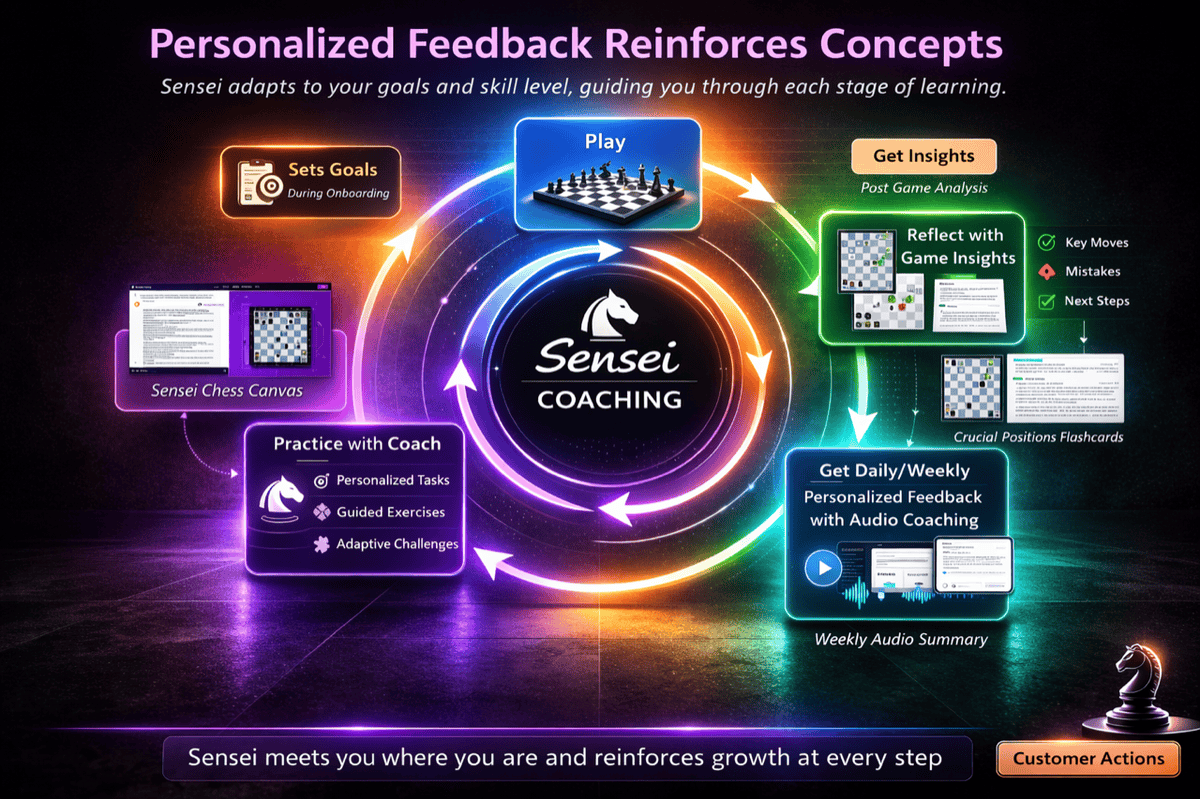
Coaching cycles, deeper stats, state-of-the-art chat, and guided practice all live in one loop. Sensei does not just show you the move. It helps you understand the pattern, choose the next priority, and see whether the work is paying off.
The Sensei Philosophy
Improvement should feel connected.
Review the game. Understand the idea. Choose a focus. Practice it. Measure whether the weakness is shrinking. Every major feature on this page exists to support one of those steps.
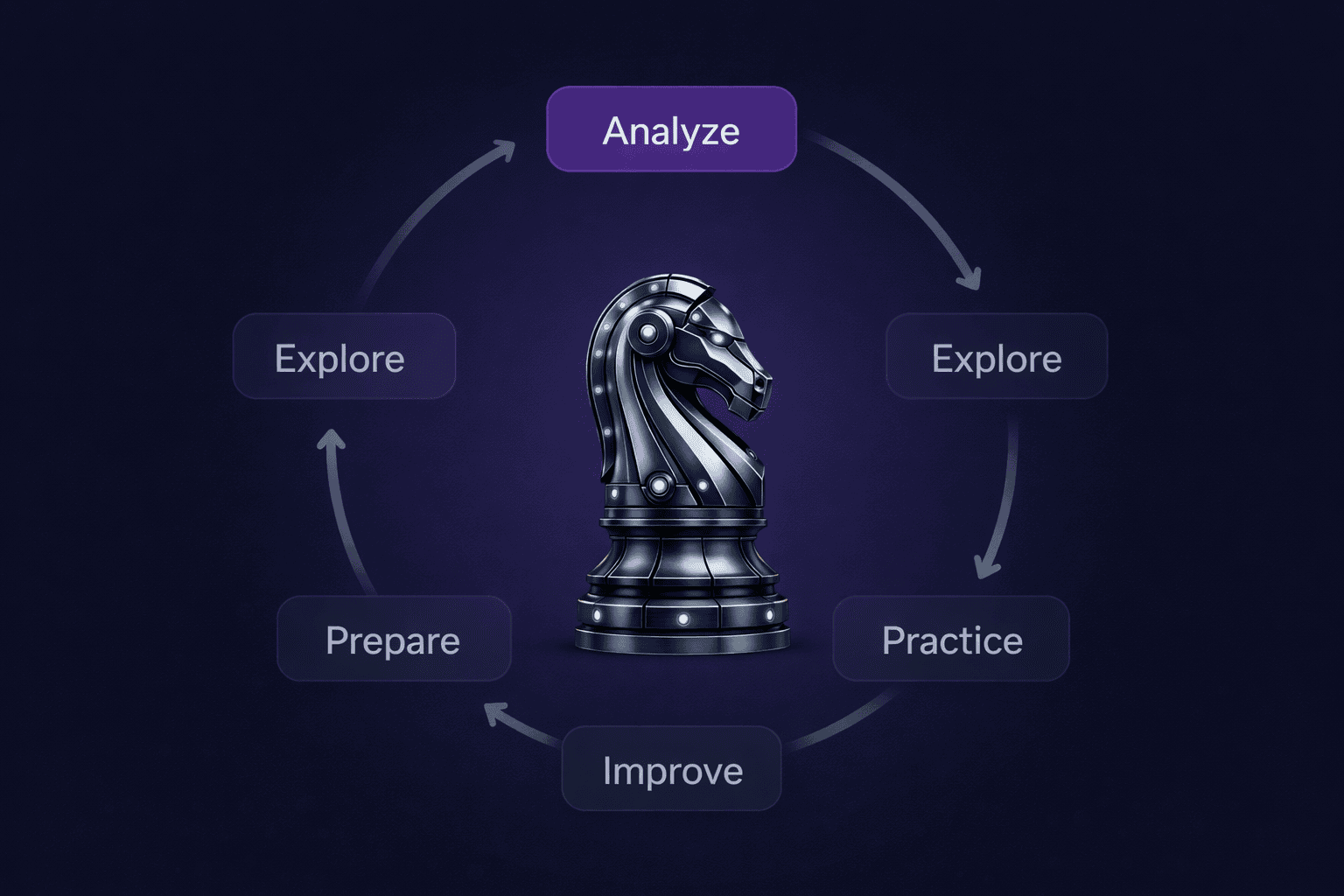
Connect The Dots
Players do not need more disconnected dashboards. They need a system that answers the right question at the right moment. Sensei’s feature set follows that progression on purpose.
1. What happened?
Crucial positions, opening breakdowns, and cross-game trends show where the game turned without burying you in engine noise.
2. Why did it happen?
Chat and audio coaching translate positions, plans, and recurring mistakes into language you can actually remember during the next game.
3. What should I train next?
Coaching cycles turn weak patterns into a short training sprint so your next ten games have a clear purpose.
4. Is it working?
Deeper stats and follow-up reporting make progress visible, so players can feel the connection between the training plan and the results.
Feature Stack
These are not isolated features. They are the product surface of the Sensei philosophy: analyze, explain, focus, practice, and measure.
Launch
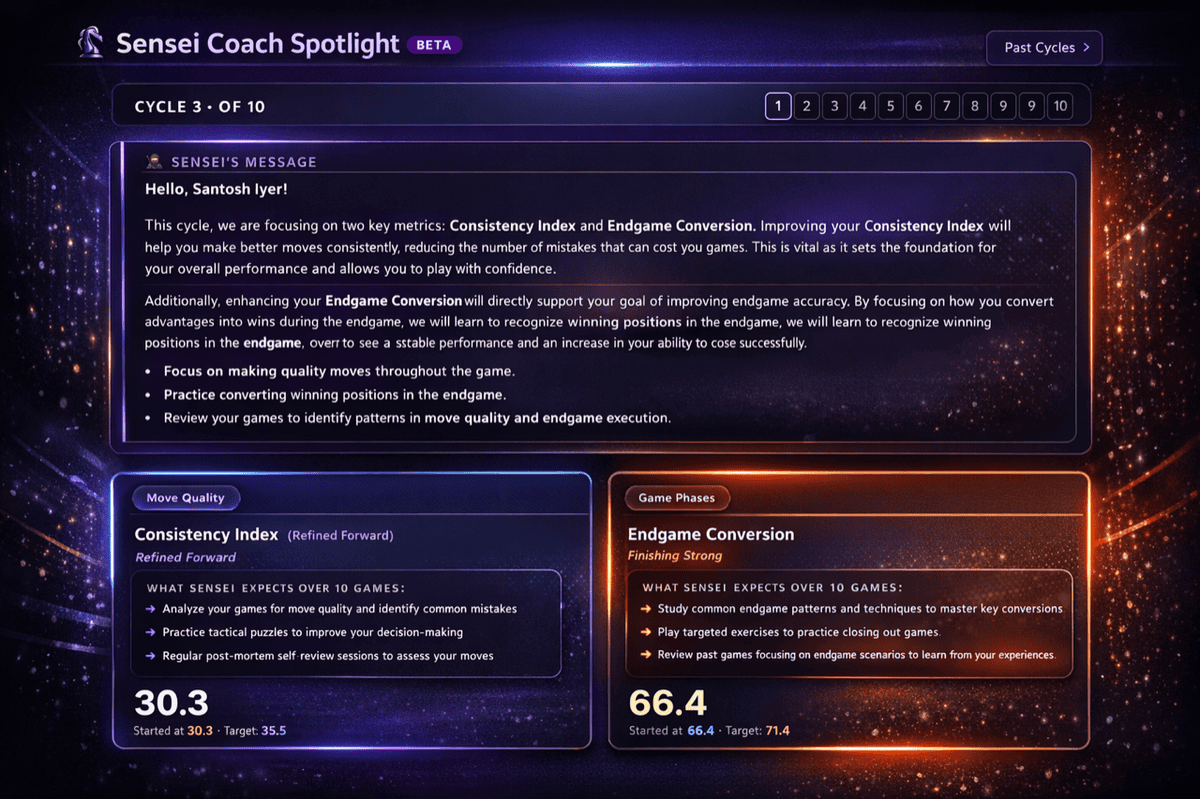
Turn a weakness into a focused block of work. Sensei sets a theme, watches the next run of games, and closes the loop with a clear assessment instead of leaving you to guess.
What players ask
How do I know what to work on next?
Coaching cycles answer that directly by turning one weak pattern into a specific 10-game training block with a clear success condition.
Focus
One concrete improvement theme at a time
Sprint
Track progress over the next ten games
Review
Finish with a narrative and next-step decision
Launch
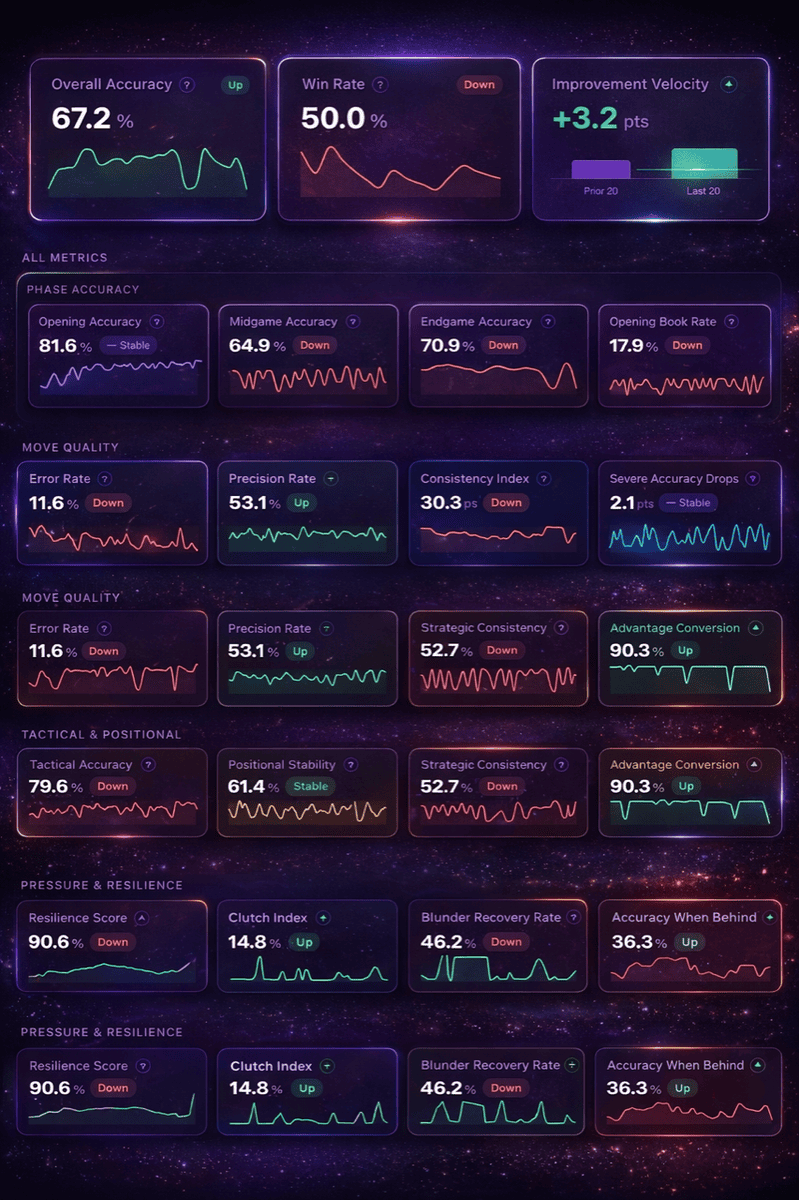
The new stats view goes beyond one number. It shows how you perform by phase, opening family, and piece activity so you can see where skill is actually breaking down.
What players ask
What do deeper stats show that accuracy misses?
They separate phase strength, expose opening-specific leaks, and surface piece activity trends so you can see why results are unstable.
Launch
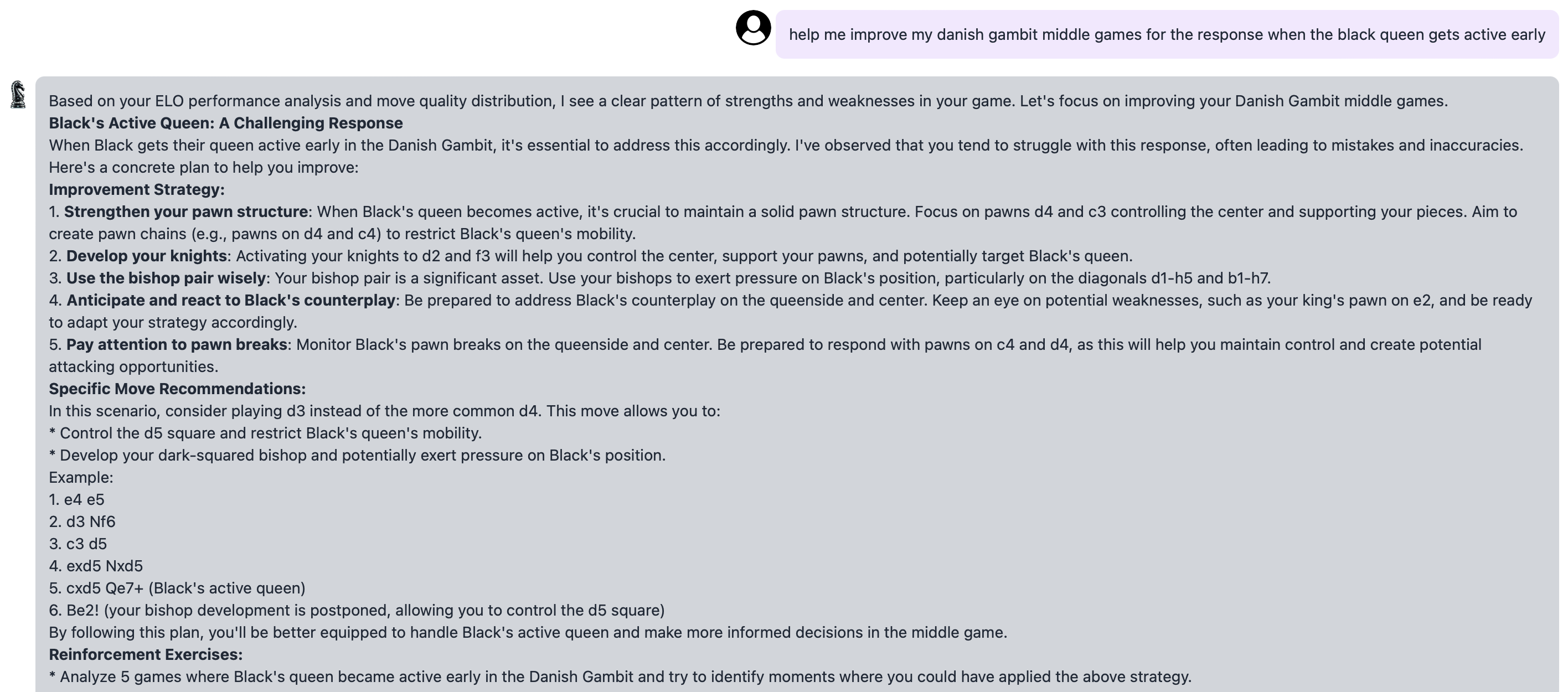
This is not generic chess chat. Sensei can reason over your imported games, the live board, and your goals, so the answers feel like they belong to your training history.
What players ask
Can I ask about my own games instead of generic chess ideas?
Yes. Sensei chat is grounded in your imported games, your live board state, and your selected goals, so the conversation stays personalized.
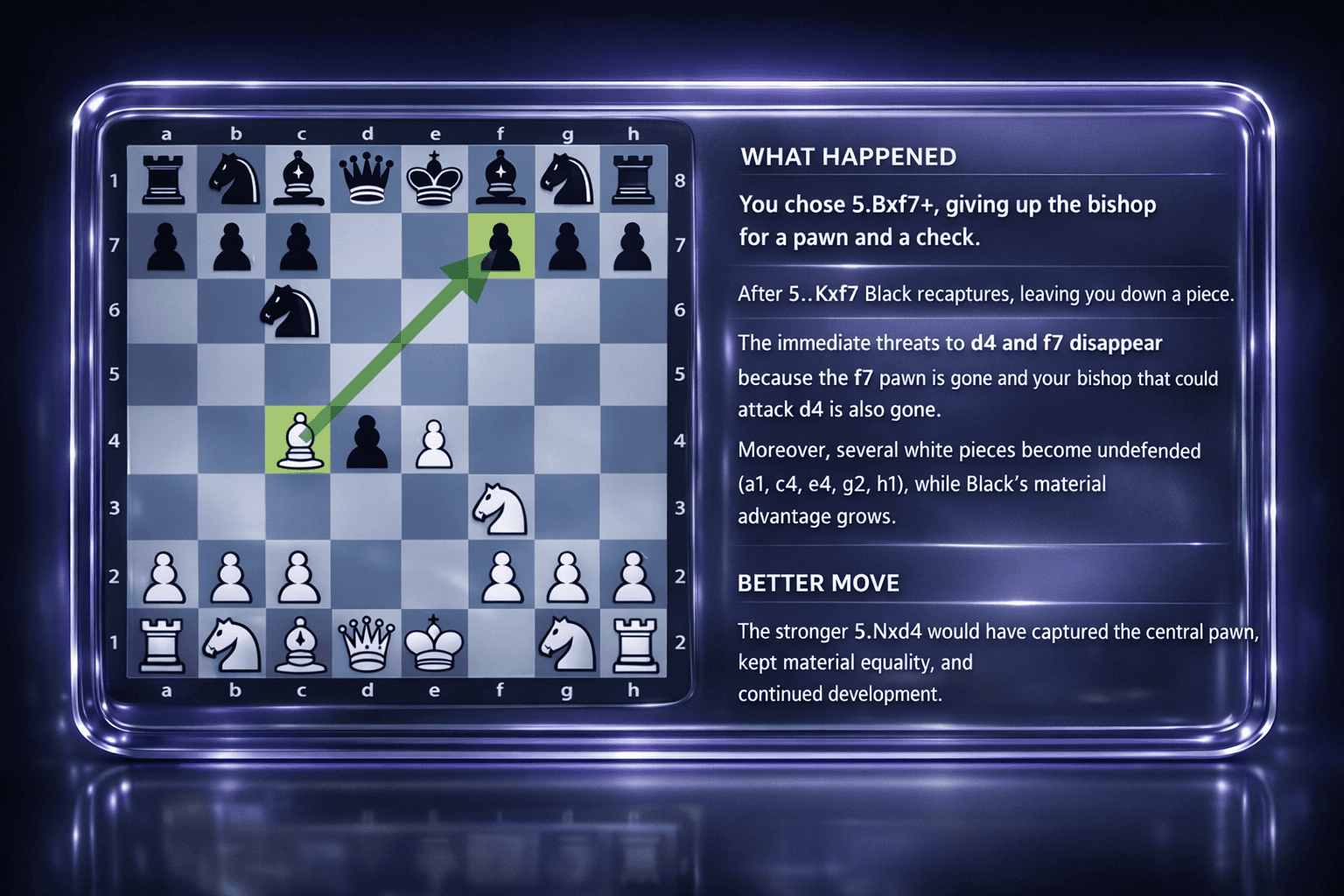
Core
Every review starts with the moves that actually changed the game. Sensei narrows the chaos, explains the idea, and helps you recognize the pattern again later.
What players ask
How does Sensei explain my mistakes?
It isolates the high-leverage decisions, shows what changed the position, and explains the pattern in language you can carry into the next game.
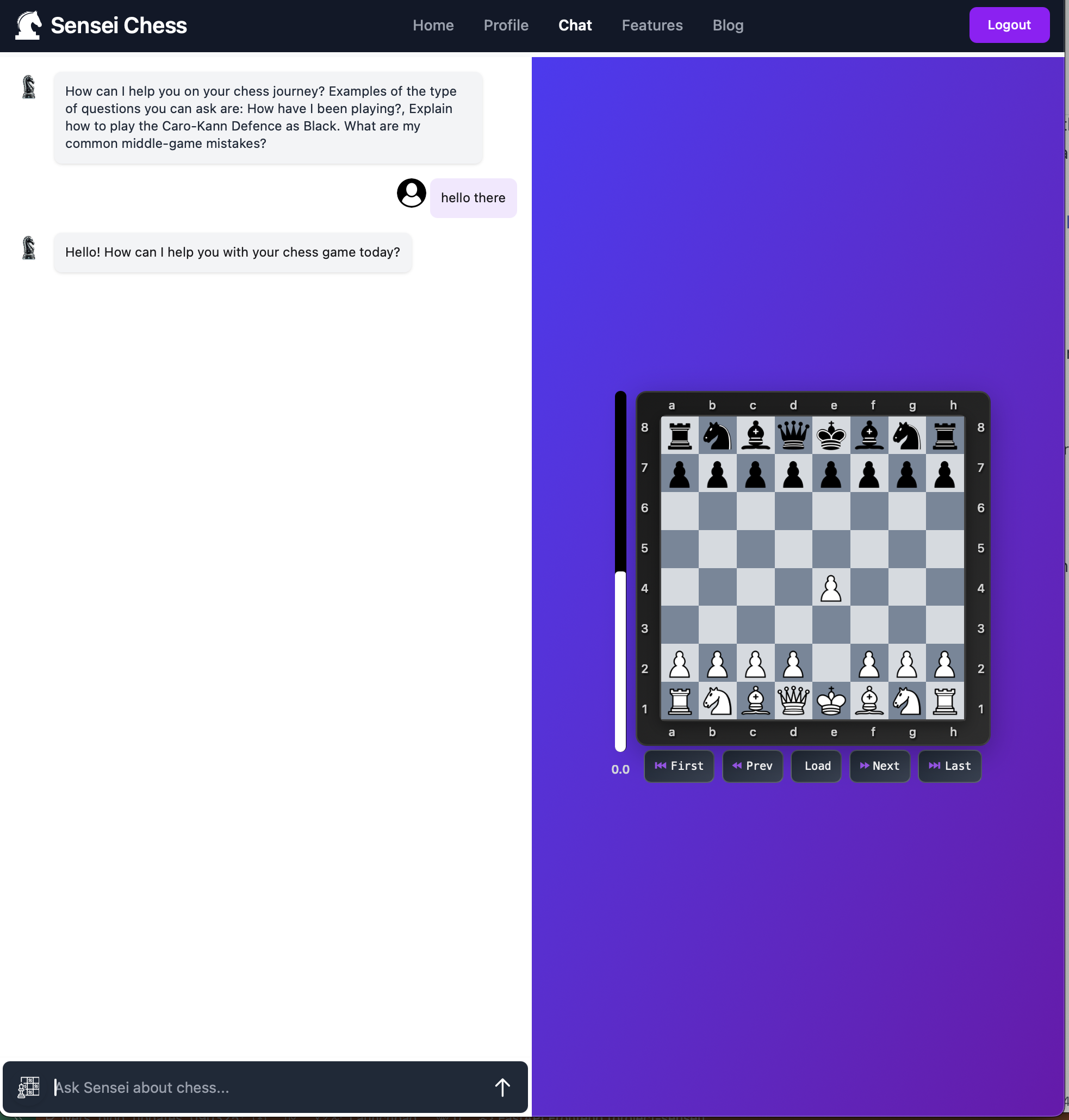
Core
When you want to test an idea, the board becomes a workspace. Load positions, ask questions, explore alternatives, and turn analysis into rehearsal.
What players ask
Can I practice ideas on the board before my next game?
Yes. The canvas lets you load a position, test alternatives, and ask follow-up questions so analysis becomes rehearsal instead of passive review.
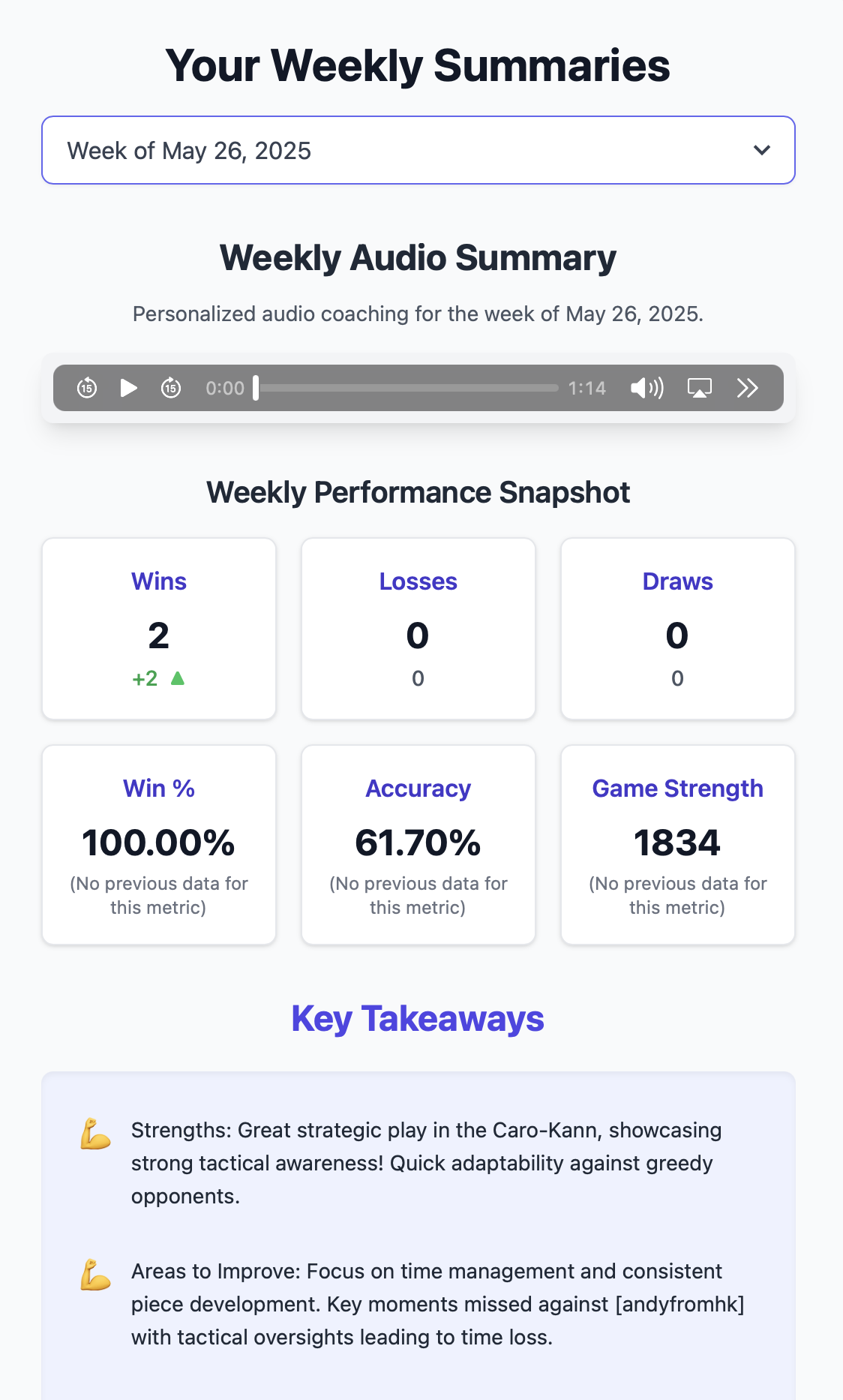
Core
Some lessons land better when you hear them. Weekly audio summaries reinforce recurring themes, strengths, and next actions in a format that feels closer to a human coach.
What players ask
Can Sensei coach me out loud?
Weekly audio coaching turns your recurring themes into short spoken lessons, which is especially useful when ideas stick better through listening than reading.
Why It Resonates
Sensei is easier to believe in because the product story is coherent: your games create the signal, the coach explains the signal, the cycle gives you a focus, and the stats show whether the focus worked.